





Ultimate Guide to Cable Gland Thread & Size Selection
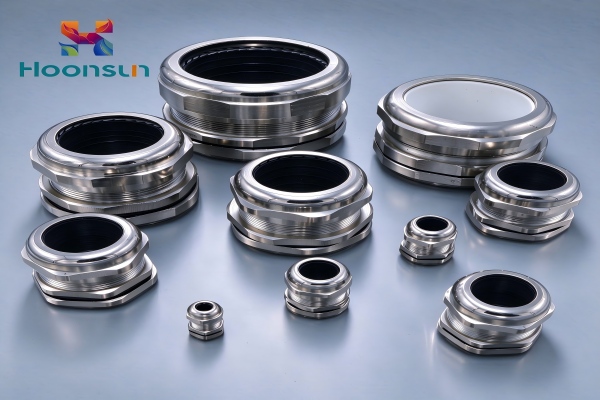
Cable Gland Thread & Size Selection Guide: Metric, PG, G and NPT
A cable gland is selected by two facts that must agree: the thread already present in the enclosure and the actual outside diameter of the finished cable. The thread determines whether the entry fits the panel; the clamping range determines whether the seal can grip the cable. This guide uses catalogue-backed Metric, PG, G and NPT ranges to build a safer selection process for industrial buyers.
Start with the Cable, Then Confirm the Thread
Do not choose a gland from the nominal conductor size alone. Measure the completed cable jacket with calipers and compare that result with a published clamping range. Next, identify the enclosure interface as Metric, PG, G or NPT. Similar-looking nominal sizes do not prove that threads are compatible. When the interface and cable OD are known, the buyer can shortlist the correct series before evaluating material, temperature or electromagnetic compatibility.
Metric cable gland Reference Ranges
Metric threads are common in industrial equipment. The catalogue lists multiple sealing inserts for many thread sizes, so the selected cable OD—not the thread label by itself—decides the final option.
| Metric thread | Catalogue cable OD ranges (mm) |
| M12 × 1.5 | 2–5; 3–6.5; 4–8 |
| M16 × 1.5 | 3–6; 4–8; 5–10; 6–12 |
| M20 × 1.5 | 5–10; 6–12; 10–14; 12–16 |
| M25 × 1.5 | 6–12; 10–14; 12–16; 13–18; 15–22 |
| M32 × 1.5 | 13–18; 14–20; 15–22; 18–25 |
| M40 × 1.5 | 18–25; 22–28; 22–30; 25–33 |
| M50 × 1.5 | 30–35; 32–38; 37–44 |
| M63 × 1.5 | 32–38; 35–40; 37–44; 42–52 |
PG, G and NPT: Use the Matching Interface
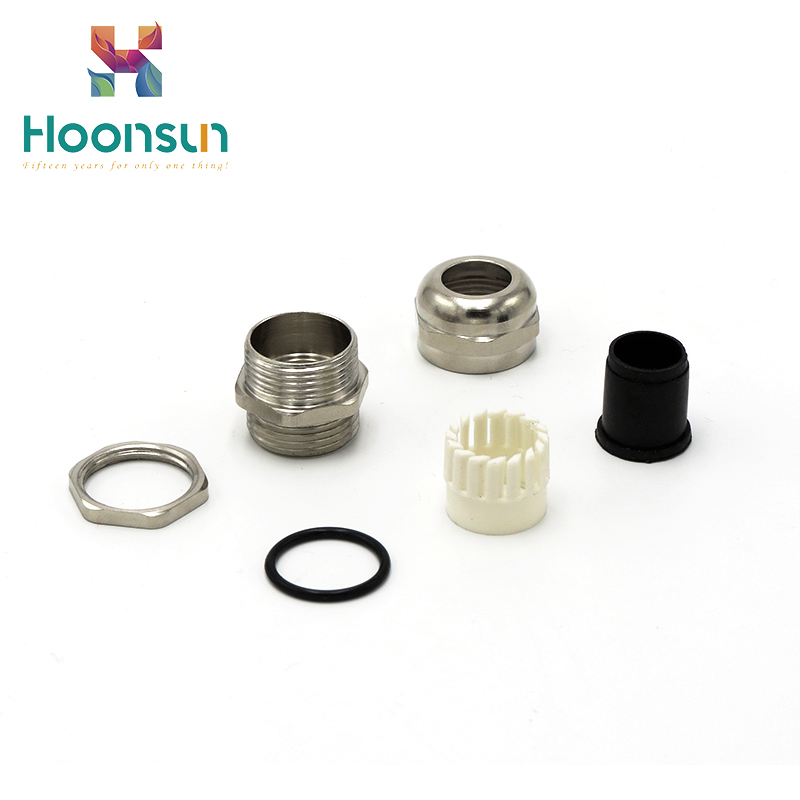
PG entries are often retained on installed equipment, while G and NPT applications require their own matching thread variants. The catalogue covers PG7 through PG48, G1/4 through G4, and NPT1/4 through NPT4. Treat the thread family as a fixed installation requirement. A cable OD that fits the seal range does not make an unmatched thread acceptable.
| Thread | Catalogue cable OD examples (mm) |
| PG7 | 2–5; 3–6.5; 4–8 |
| 4–8; 6–12; 10–14; 12–16 | |
| PG21 | 4–8; 12–16; 13–18; 15–22 |
| G1/2 | 5–10; 6–12; 10–14 |
| G1 | 15–22; 18–25 |
| NPT1/2 | 5–10; 6–12; 10–14 |
| NPT1 | 15–22; 18–25 |
A Five-Step Selection Method
- Measure the actual outside diameter of the finished cable jacket.
- Identify the thread cut into the enclosure: Metric, PG, G or NPT.
- Choose a catalogue clamping range that contains the measured OD.
- Confirm the selected series suits the required operating condition.
- Check accessory needs, including locknuts, reducers, seals or plugs, before release.
Choose the Series After the Size Is Set
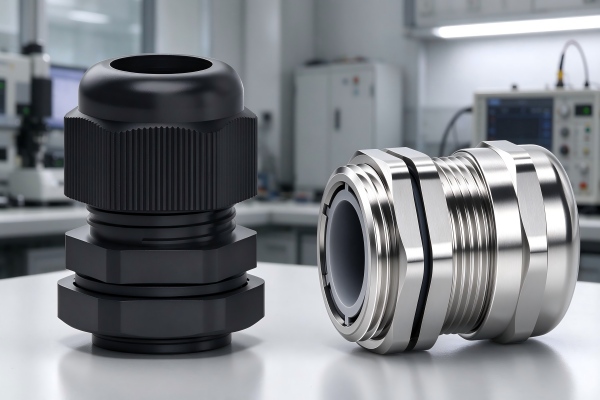
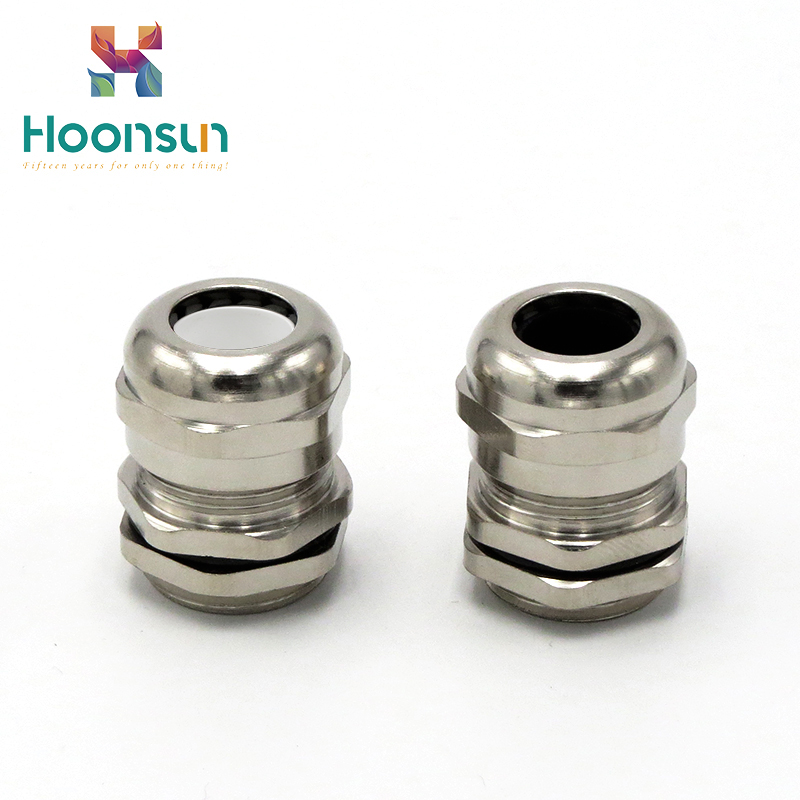
For standard nickel-plated brass Metal Cable Glands, the catalogue lists PA66 UL94-V2 claws, EPDM or silicone rubber seals and O-rings, IP68 at 10 bar, and a -40°C to 100°C operating range with short-time exposure to 120°C. These are standard-series facts, not a substitute for a series-specific review. If the application needs higher temperature, shielding contact, stainless material, armoured construction or hazardous-location approval, move to the applicable dedicated product family instead of stretching the standard selection.
How to Read Overlapping Clamping Ranges
Many catalogue sizes have more than one insert range. That is useful because the same enclosure thread can be matched to different cable diameters. For example, M20 × 1.5 is listed with 5–10, 6–12, 10–14 and 12–16 mm options. A buyer should select the insert whose documented range contains the measured cable OD, then keep the exact part code with the RFQ. Do not assume that one M20 gland covers every cable up to 16 mm. The thread is the panel interface; the insert range is the sealing interface.
The same logic applies to PG, G and NPT versions. When a cable sits close to either end of a documented range, request confirmation for the exact cable construction and jacket measurement. Cable jacket tolerances, flat or non-round shapes, and multi-core layouts can change the sealing question. The catalogue range is the starting point for selection, while the actual application details complete the decision.
Information to Include in a cable gland RFQ
- Required thread family and nominal size, such as M20 × 1.5, PG16, G1/2 or NPT1/2.
- Measured finished cable OD in millimetres, plus cable shape where relevant.
- Target product family: standard metal, high-temperature, EMC, stainless steel, marine, armoured or hazardous-location.
- Required environmental conditions, installation wall thickness, quantity and any accessory requirement.
Frequently Asked Questions
How do I choose between M20 and M25 cable glands?
First confirm the enclosure thread. If it is M20 × 1.5, select among the catalogue M20 cable ranges of 5–10, 6–12, 10–14 or 12–16 mm. If the enclosure is M25 × 1.5, use the M25 ranges listed for that interface. The same cable OD does not make an M20 thread interchangeable with M25.
Can a PG cable gland replace a Metric cable gland?
Not directly. The product must match the thread already present in the equipment. Use a correctly specified adapter only when the installation design allows it; do not force a PG or Metric part into a different thread form.
Does the catalogue include G and NPT options?
Yes. The documented standard ranges include G1/4 to G4 and NPT1/4 to NPT4. The catalogue notes that NPT models are normally supplied without a locknut, with locknuts available as an option.
Conclusion
A reliable selection begins with cable OD and enclosure thread, then moves to the correct clamping range and product family. Publishing this logic beside a clear size chart helps buyers self-qualify while giving the sales team the measurements needed for an accurate quotation. For content maintenance, review every table whenever a product range is revised and keep each range tied to its intended thread family. A useful page also tells buyers what information to send: a photo of the enclosure entry, the measured cable OD, the thread designation and the operating condition. These details turn a broad online search into a technically usable request rather than an uncertain order.