




How Do You Match Cable Gland Size and Material to Your Installation Environment?
How Do You Match Cable Gland Size and Material to Your Installation Environment?
The same gland can thrive in one installation and fail in another. Size, thread length, material grade and environmental rating must be evaluated together — here is the complete process.
A cable gland that performs perfectly in one installation can fail prematurely in another, even with identical dimensions. The reason is that both the gland size and its material grade must be matched to the operating environment. Temperature swings, moisture, vibration, chemical exposure and panel wall thickness all influence which gland specification is correct.Engineers who consider only the cable diameter often discover that the component was dimensionally correct but environmentally unsuitable. A complete selection process evaluates size, thread length, material and environmental rating together.
1. Sizing Dimensions Beyond the Cable Range
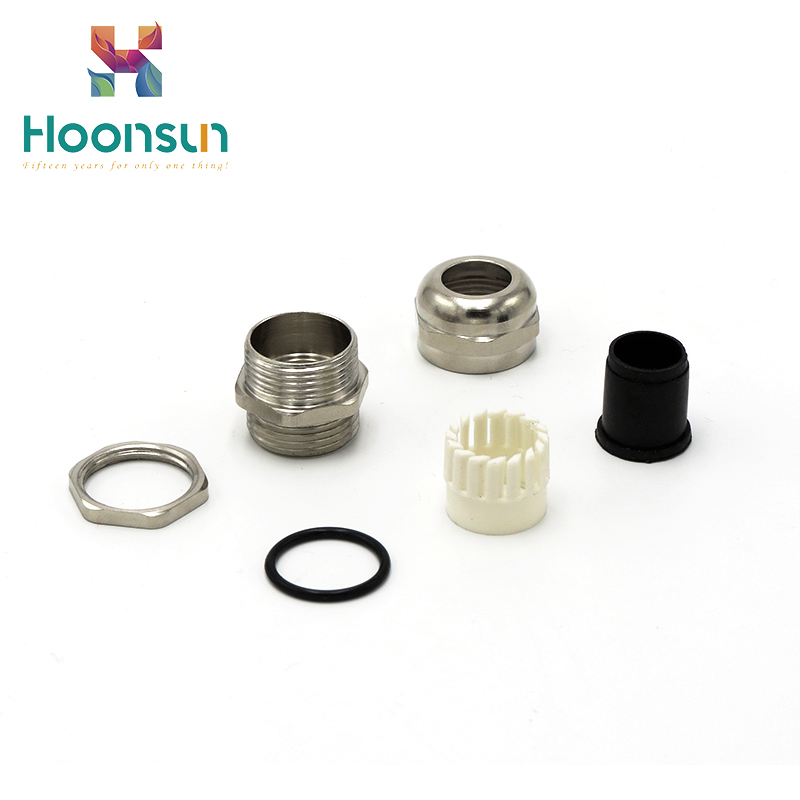
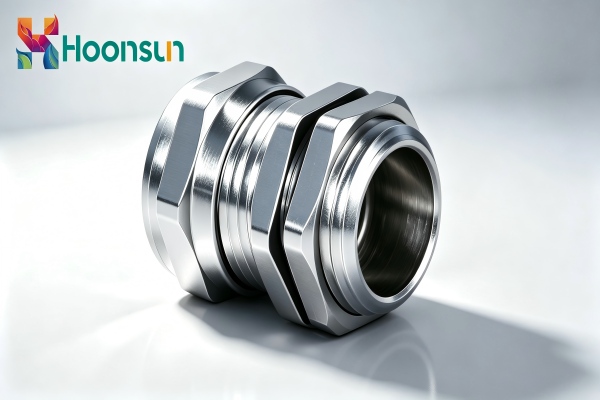
The thread length determines how securely the gland fastens to the enclosure. Standard metal glands carry an 8 millimeter thread, suitable for thin sheet metal panels common in control cabinets. When the panel wall exceeds this depth, the gland cannot fully engage and may loosen under vibration. The catalog offers extended thread versions: the PG9 L12 version provides 12 millimeters of engagement, and larger sizes such as PG29 L15 and PG48 L18 reach even deeper into thick machine frames and cast enclosures. Metric extended threads follow the same logic, with M16, M18, M20, M22 and M25 available in L12 versions.
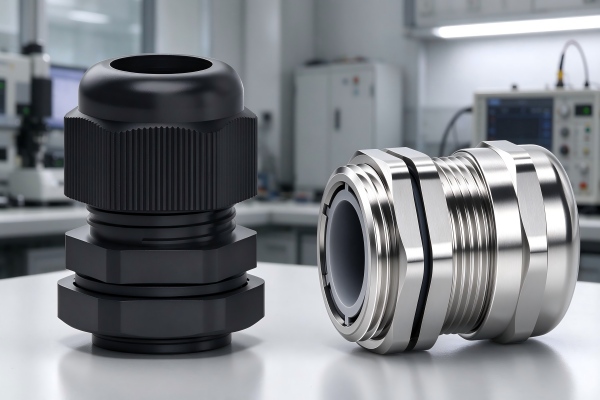
The assembled height of the gland affects clearance inside the enclosure. The standard PG9 metal gland stands 19 to 21 millimeters talldepending on cable range, while the stainless steel version measures 20 millimeters. In densely packed panels where internal components sit close to the wall, this dimension determines whether the gland interferes with circuit boards or DIN rail components. Nylon Glands tend to sit taller than metal equivalents, so low-profile requirements often favor metal.
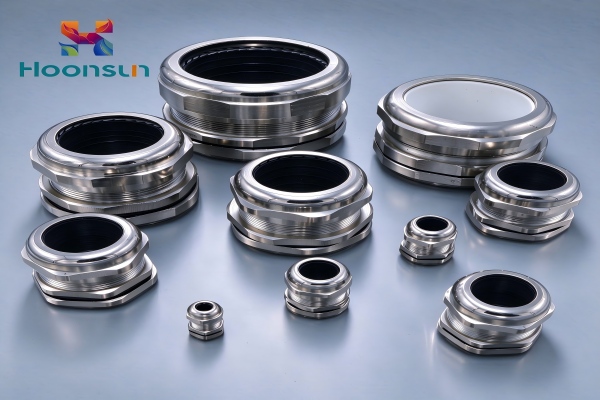
Each thread size offers multiple internal seal variants to cover different cable diameters. The PG11 size, for instance, is available with ranges from 4 to 8 mm, 5 to 10 mm and 6 to 12 mm. Selecting the variant that centers on the actual cable outer diameter provides the best seal compression and strain relief.
2. Material Grades and Their Environmental Boundaries
3. Scenario-Based Selection Examples
FAQ
Conclusion: Match Size, Thread and Material Together
Matching gland size, thread length and material grade to the installation environment prevents both dimensional and environmental failures. Evaluate cable outer diameter, panel wall thickness, temperature range, corrosion exposure and internal clearance together rather than in isolation. Send your project conditions to our engineering team for a complete size and material recommendation.
Get a Complete Size & Material Recommendation