



How Do Nylon Strain Relief Cable Glands Perform vs Standard Nylon Cable Glands in Bend Tests?
Executive Summary
Controlled bend cycle testing confirms that Nylon Spiral Strain Relief cable gland5–10x longer flex life, superior cable conductor protection and consistent IP sealing retention compared to standard Nylon Cable Glands. While standard glands remain cost-effective for static wiring, strain relief designs reduce total cost of ownership for high-flex applications such as drag chains, robotic arms and outdoor moving equipment.
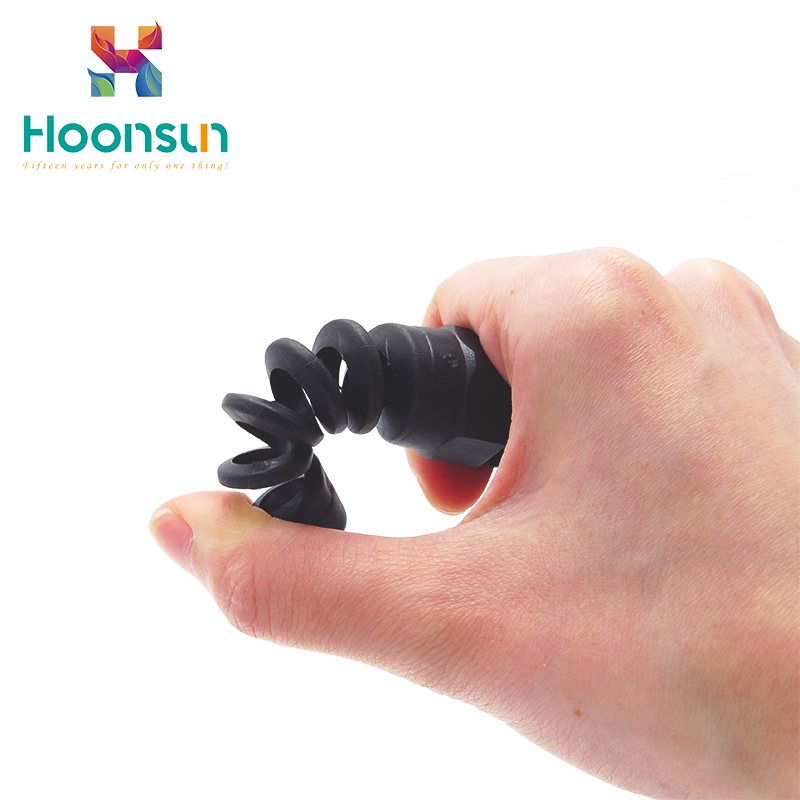
Table of Contents
1. Repeated Bend Lifespan Comparison
In standardized bend cycle testing, the structural difference between the two designs creates a dramatic gap in fatigue failure thresholds.
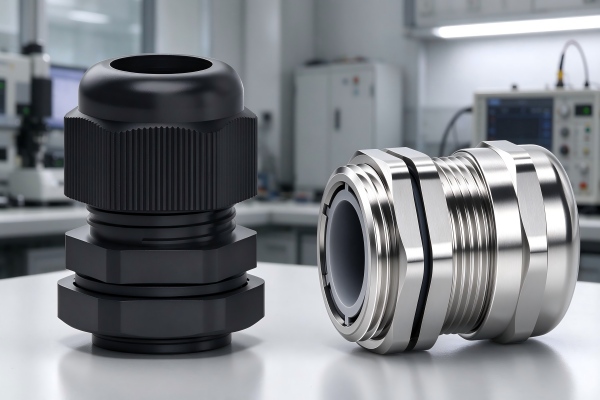
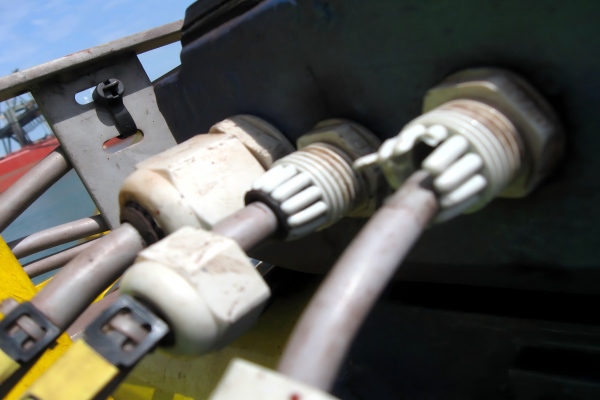
Standard Nylon Cable Glands use a rigid, straight exit that creates a sharp stress concentration point exactly where the cable exits the fitting. After only3,000–8,000 bend cycles, the cable jacket typically cracks at this junction, and the gland body itself may develop fatigue cracks at the clamping edge.
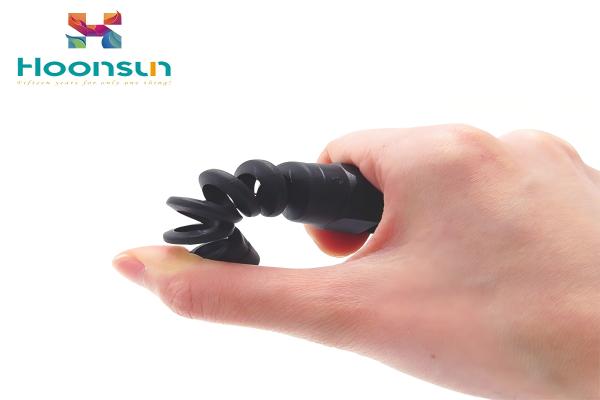
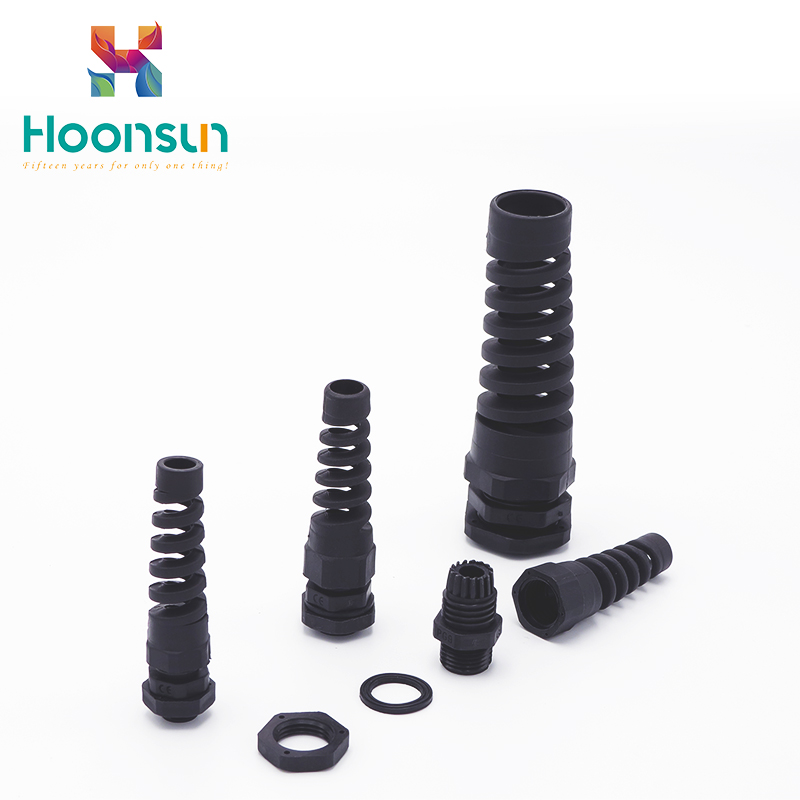
Nylon Spiral Strain Relief cable gland distribute bending force across a coiled flexible section, eliminating the single sharp stress point. This allows the same cable type to survive10,000–50,000+ bend cycles without visible damage to either the cable or the gland.
2. Head-to-Head Bend Test Performance Data
3. Cable Sheath & Inner Conductor Protection
Bend testing also reveals major differences in how each design preserves the integrity of the cable itself, beyond just the gland body.
Standard Gland Pinch Damage
Standard cable glands pinch the cable at a single fixed point during every bend. Over repeated flex cycles, this concentrated pinching wears through the outer jacket and can fatigue and break internal copper conductors — even when the gland body appears fully intact. This hidden internal damage causes intermittent electrical faults that are notoriously difficult to diagnose in the field.
Strain Relief Gradual Support
Nylon Spiral Strain Relief cable gland support the cable gradually through their flexible spiral section, spreading bending force evenly along a longer length of cable. This reduces peak stress on both the outer jacket and inner conductors, preserving full cable and gland integrity over the service life.
4. Sealing & Clamping Retention After Flexing
Long-term sealing performance is another critical gap exposed by bend testing.
Standard Nylon cable glands loosen incrementally with each bend cycle, as cable movement gradually rotates the clamping nut. Once clamping force drops below threshold, the cable can slide in and out of the gland, breaking the IP dust and water seal and exposing internal equipment to contamination.
Strain relief cable glands absorb nearly all bending movement in their flexible section, so minimal rotational or pulling force transfers to the clamping nut and seal assembly. Bend tests verify that properly installed strain relief glands maintain full clamping force and IP sealing performance even after completing their full rated cycle life.
5. Real-World Application Impact
The performance differences translate directly to reliability and cost outcomes across common industrial scenarios:
Drag Chains & Conveyors
Continuous back-and-forth flexing makes strain relief glands the standard choice, reducing cable replacement frequency by up to 80%.
Robotic Arm Systems
Multi-axis bending and torsion demand strain relief designs rated for both linear and torsional flex performance.
Outdoor & Harsh Environments
Consistent IP seal retention protects against dust, moisture and corrosion in outdoor or washdown installations.
6. Frequently Asked Questions
7. Final Conclusion
Side-by-side bend performance testing clearly demonstrates Nylon Spiral Strain Relief Cable Gland that significantly outperform standard Nylon cable glands in three critical areas:
- 5–10x longer fatigue life in repeated bend applications
- Superior cable protection for both outer jacket and internal conductors
- Reliable IP seal retention even after full rated flex life
Standard Nylon glands remain the most economical choice for static, non-moving wiring. For any system with regular cable movement, strain relief designs deliver substantially lower total cost of ownership over the equipment lifecycle.
Need Custom Test Data for Your Cable Specification?
Contact our engineering team with your project details. We provide free comparative performance datasheets, dimension charts and test samples.
Request Test Data & Samples