



Custom vs Standard PG9 Cable Glands: Which Should You Choose
Custom vs Standard PG9 Cable Glands: Which Should You Choose?
Standard Pg9 Glands are cheap and available today, but custom variants solve dimensional, environmental and branding needs that catalogs cannot. Learn when to buy off-the-shelf, when to customize — and how to avoid paying for either one unnecessarily.
The PG9 size is one of the most widely stocked cable gland specifications globally, with standard catalog versions readily available from distributors and online suppliers. However, custom PG9 variants exist to address specific requirements that standard versions cannot meet. Choosing between custom and standard PG9 glands depends on your project’s environmental conditions, dimensional constraints, certification needs and order volume.Understanding the trade-offs helps you avoid paying unnecessary customization premiums or selecting a standard product that will fail prematurely.
PG9 Cable Glands at a Glance
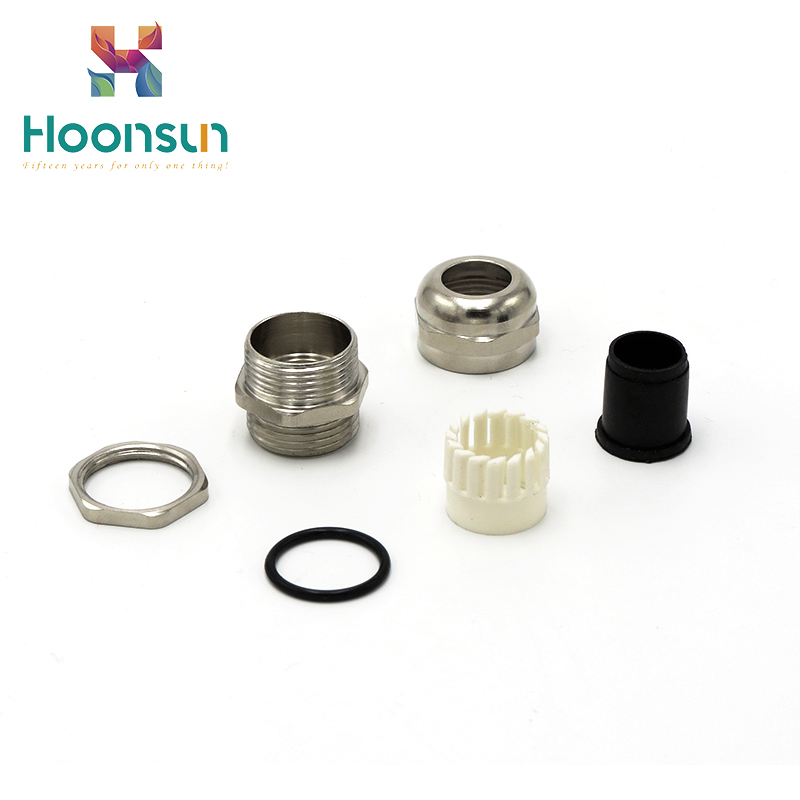
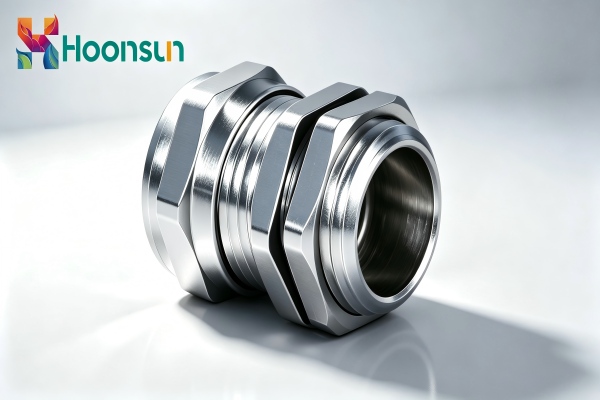
Before comparing options, confirm the standard PG9 baseline that both catalog and custom parts build on:
| Parameter | Standard PG9 Value |
|---|---|
| Thread standard | M16 × 1.5 (PG9) |
| Thread O.D. (AG) | 15.2 mm |
| Cable range | 4–8 mm (standard); 3–6 mm / 5–10 mm variants |
| Thread length (GL) | 8 mm standard; extended L12 available |
| Assembled height (H) | 19 mm standard |
| Body material | Nickel-plated brass (SS304 / SS316L optional) |
| Protection degree | IP68 – 10 bar |
| Temperature | Static −40 °C to 100 °C (short-time 120 °C); dynamic −20 °C to 80 °C |
| Certifications | CE, RoHS, IP68, REACH |
When Standard PG9 Glands Are the Right Choice
Standard catalog PG9 nickel-plated brass glands are sufficient for the majority of general industrial indoor installations. If your project uses common cable diameters between 4 and 8 mm, mounts on standard thin metal enclosures with 8 mm thread engagement, operates in normal temperature and humidity ranges, and requires only general dust and water protection, a standard Pg9 Gland delivers reliable performance at the lowest cost.
Standard parts are available from local distributors with short lead times, often same-day or next-day delivery for urgent maintenance replacements. They also carry well-documented specifications and certifications, simplifying compliance documentation for standard electrical projects.
For low-volume projects, pilot builds or maintenance spare parts, standard Pg9 Glands are almost always the most cost-effective and practical choice.
Dimensional Mismatch Signals That Custom Is Needed
Certain dimensional constraints immediately rule out standard PG9 options:
These dimensional mismatches cannot be resolved with adapters without compromising sealing performance, making custom the only reliable solution.
Environmental Conditions That Justify Custom Material Upgrades
Environmental severity determines whether standard brass Pg9 Glands will survive. Standard nickel-plated brass works well for dry, indoor environments with normal temperature variation. But for coastal locations, chemical processing plants, washdown zones or outdoor installations with continuous UV exposure, material customization is necessary.
Attempting to use standard brass glands in these environments leads to premature rust, thread seizure and seal failure — early replacement that costs more than the initial customization premium.
Cost and Lead Time Comparison
| Factor | Standard PG9 | Custom PG9 |
|---|---|---|
| Unit price | Lowest (mass-produced, stocked) | Higher (modified tooling, special materials) |
| Lead time | Immediate from local inventory | 2–4 weeks production + shipping |
| Best for | Urgent projects, low volume, general indoor | Long-running programs, harsh environments |
| Life-cycle cost | Higher if replaced early in harsh duty | Lower via longer service life, less downtime |
For urgent projects with no unusual requirements, standard availability is a decisive advantage. For long-running production programs or projects in harsh environments, the higher upfront cost of customization is offset by longer service life, reduced maintenance and avoided downtime.
Certification and Branding Requirements
OEM equipment manufacturers often require custom branding, laser-marked part numbers or specific certification documentation tied to their product line. Standard catalog Pg9 Glands from generic suppliers do not carry customer-specific markings or factory test documentation formatted for OEM quality systems.
These customization features support quality audit requirements and help build consistent product branding across equipment lines — without defaulting to standard parts for every installation or over-customizing low-requirement projects.
Standard vs Custom PG9: Decision Guide
Use this quick reference to route each cable entry to the right option:
| Consideration | Choose Standard | Choose Custom |
|---|---|---|
| Cable diameter | 4–8 mm | Outside 4–8 mm, same M16 thread |
| Enclosure wall | Up to 8 mm | Thicker than 8 mm (L12) |
| Environment | Dry, indoor, normal temperature | Coastal, chemical, washdown, UV, high heat |
| Volume | Low volume, pilot, spares | Long-running production |
| Lead time | Same-day / next-day | 2–4 weeks |
| Marking & docs | Generic catalog specs | OEM logo, laser marking, material certs |
Custom vs Standard PG9 — FAQ
Conclusion: Choose the Right PG9 for Every Cable Entry
Standard PG9 cable glands serve general indoor applications well with low cost and fast availability, while custom variants solve dimensional, environmental, certification and branding needs that standard versions cannot address. Evaluate each cable entry location individually to select the right PG9 specification.
Get a Custom Recommendation