Inquiry
Form loading...
0%

Picking a cable gland supplier isn’t just about comparing prices in a catalog. To get the right Metal Cable Gland—whether it’s M-Type or PG-Type—it needs to match your cable, the enclosure, and the environment where it’s going to be installed. If there’s a mismatch, you might end up with too little space for a proper seal, or the assembly could turn into a real hassle. Trust me, those small details really do matter.

In this guide, I’ve pulled together info on ten different suppliers to help folks compare their Metal Cable Gland options. We look at their product ranges, the technical info they provide, whether they offer customization, and how good their support is. When you're checking outCable Gland Type And Size, make sure to verify things like thread type, size, clamping range, and material. A good tip—don’t just rely on the cable’s nominal description; actually measure the outer diameter of your cable. Also, take a look at the product datasheet and ask how the gland will perform in your specific conditions. Product claims are nice, but having clear specs is way more helpful.

Keep in mind, supplier info can change over time, and no single list can cover every detail or make your decision for you. Every manufacturer has its own strengths—some might be perfect for standard panel setups, while others might provide better guidance for unusual configurations. It’s always smart to compare the current specs and, if possible, ask for samples. Make sure the gland actually fits your enclosure entry point and the cable jacket—those little details are easy to overlook but super important. This overview is just a starting point, not a comprehensive guide. Even experienced buyers can miss measurements sometimes, so double-check before hitting the order button.
Top 10 M Type and PG Type Metal Cable Gland Suppliers

M-Type and PG-Type Metal Cable Glands: Definitions and Thread Standards

M-type and PG-type Metal Cable Glands secure cables where they enter enclosures. A typical gland combines a threaded body, sealing insert, and compression nut. The seal grips the cable jacket; the metal body bonds mechanically to the enclosure. IEC 62444:2010sets performance and test requirements for cable glands, whileIEC 60529 defines enclosure IP classifications. An IP rating depends on the tested assembly, not the gland alone.

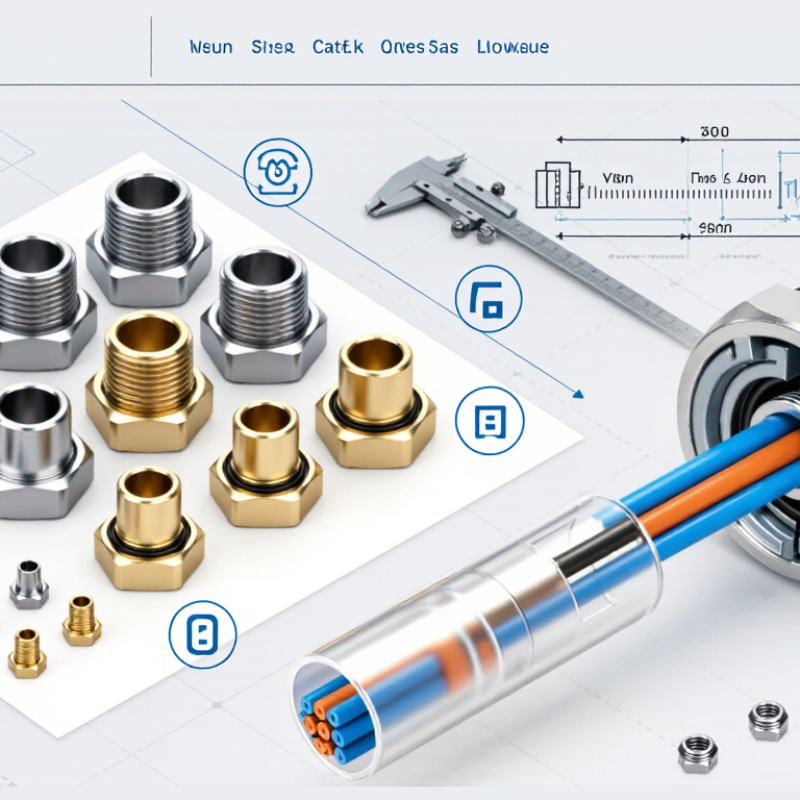
Thread details matter. Metric threads follow ISO 261 and ISO 965; for example, M20 × 1.5 has a 20 mm nominal diameter and 1.5 mm pitch. PG threads use the older DIN 40430 system. A PG11 thread measures about 18.6 mm across, with a 1.41 mm pitch. Threads are not interchangeable. M20 may appear close to PG11, but its diameter and pitch differ. Check the pitch.

In the field, confirm the enclosure’s tapped entry, cable diameter, wall thickness, and required IP level before ordering. A caliper helps, but thread gauges are more dependable when markings have worn off. One detail is easy to miss: a locknut can fit while the thread itself is wrong. Standards provide dimensions and test methods; they do not make mismatched threads compatible.

How IEC 62444 Defines Cable Gland Performance and Test Requirements

IEC 62444:2010 sets requirements and test methods for cable glands used in electrical installations. It assesses details that matter on a real installation: construction, cable anchorage, and resistance to mechanical stress. For aMetal Cable Gland, ask suppliers for test records covering the exact size, material, and cable range—not merely a similar model. Small details matter. A wider cable or different sealing insert can change performance.

Ingress protection needs careful reading. IEC 62444 works alongside IEC 60529, which defines IP enclosure tests. Under IEC 60529, an IPX7 rating involves immersion at a depth of 1 metre for 30 minutes; it does not prove resistance to every washdown or outdoor condition. Match the required IP rating to the actual exposure, and check how the gland was installed during testing. Not just the thread. Request the test basis, sample configuration, and declared operating limits when comparing M Type and PG Type options. Supplier documents can be incomplete, and a pass result alone may not describe service life. These checks support a more defensible comparison without treating a catalogue claim as field evidence.

Top 10 M Type and PG Type Metal Cable Gland Suppliers - How IEC 62444 Defines Cable Gland Performance and Test Requirements

Supplier-neutral comparison of ten technical criteria for evaluating Metal Cable Glands. IEC 62444 specifies requirements and tests; confirm applicable classifications and acceptance criteria in the current standard and the product’s test documentation.

No. Evaluation dimension What to verify for M and PG glands Relevant evidence or test Why it matters
1 IEC 62444 conformity Confirm the exact gland model and configuration are covered by the declared conformity; request the standard edition and report scope. Declaration, certificate where applicable, and test report identifying the tested product. A general statement of conformity may not cover every size, material, or accessory.
2 Thread form and size Check whether the entry is metric M or PG, and confirm its nominal size, pitch or thread form, and required mounting-hole compatibility. M and PG threads are not interchangeable. Dimensioned drawing and thread-gauge or dimensional inspection records. Correct thread engagement is essential for installation and enclosure sealing.
3 Cable diameter and clamping range Compare the cable’s actual outside diameter with the stated sealing and clamping range for the selected gland size. Manufacturer dimensional data and applicable clamping or retention test results. A cable outside the specified range can compromise grip and sealing.
4 Cable retention and anchorage Check that the gland’s cable-gripping arrangement is suitable for the cable construction and intended mechanical loading. IEC 62444 mechanical tests applicable to the product classification, plus test details for the relevant cable range. Adequate retention helps limit cable movement and strain at the termination.
5 Sealing performance Review the declared sealing capability and the assembly conditions, including cable diameter, seals, locknut, and enclosure interface. Relevant IEC 62444 sealing test results and installation instructions; check any separately declared IP rating against its stated test basis. Sealing depends on the complete installed assembly, not the gland body alone.
6 Impact resistance Confirm the applicable impact classification and the conditions under which the metal gland was tested. IEC 62444 impact test report for the relevant product construction and size range. Impact performance is important where glands may be exposed to knocks or installation damage.
7 Corrosion protection Identify the body material and surface finish, then assess suitability for the installation environment. Material and coating specifications, together with applicable corrosion-resistance test evidence. Corrosion can affect mechanical integrity, threads, and electrical bonding surfaces.
8 Temperature suitability Check the declared operating temperature range for the complete gland, including seals and inserts. Product datasheet and applicable IEC 62444 thermal or ageing test documentation. Seal materials and other components can respond differently to heat and cold.
9 Electrical continuity and bonding Where bonding is required, verify the gland’s intended electrical function and its compatibility with the cable construction and enclosure. Relevant electrical test results and installation requirements; confirm whether additional bonding accessories are needed. Not every metal gland or cable arrangement provides the same bonding function.
10 Installation and traceability Review assembly sequence, tightening guidance, compatible locknuts and accessories, product identification, and batch traceability. Installation instructions, technical drawings, and traceable product or batch documentation. Correct installation is necessary to achieve the performance shown in test documentation.

Note: This table is a supplier-evaluation checklist, not a ranking of named suppliers or a substitute for IEC 62444. Confirm the current standard edition, product classification, test scope, and installation requirements before selection.

IP Ratings Explained: IEC 60529 IP6X Dust Protection and IPX8 Immersion

IP ratings describe protection, not general product quality. Under IEC 60529, the first digit 6 means dust-tight: no dust may enter the enclosure during the specified test. The X in IPX8 means no dust rating is stated. The 8 indicates protection during immersion beyond the conditions covered by IPX7, but the required depth and duration depend on the product’s stated conditions. There is no single immersion depth for every IPX8 component.

A Cable Gland Metal fitting does not guarantee the complete assembly’s rating. The gland, cable diameter, seal, locknut, and enclosure must work together. A seal can look snug and still fail if the cable is undersized or the entry thread is damaged. Small details matter.

Tips: Check the datasheet for tested depth and duration. Fit the specified cable range, tighten the gland correctly, and inspect seals for cuts or flattening. Test the assembled enclosure when practical. A printed rating alone can create false confidence; installation conditions deserve a second look.

Top 10 M-Type and PG-Type Metal Cable Gland Suppliers Compared

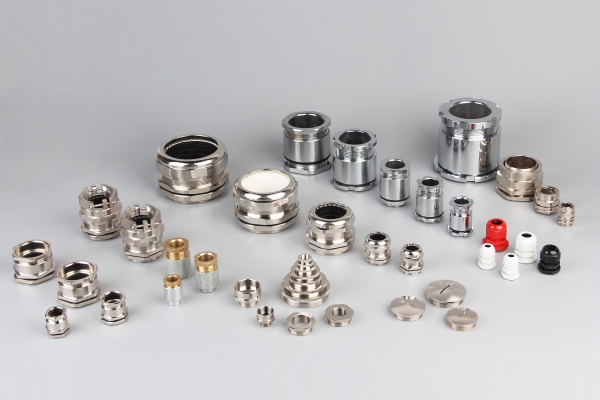
Comparing ten M-Type and PG-Type metal cable gland suppliers is most useful when the same requirements are applied to each. M threads follow metric sizing, while PG threads use a different thread profile and sizing system; similar-looking parts are not automatically interchangeable. Check the thread size, pitch, cable diameter range, and panel thickness before comparing prices. A sample gland should screw into the intended enclosure without forcing, and its sealing insert should grip the cable jacket evenly. Small details matter.

Material options also shape the comparison. Nickel-plated brass suits many general industrial installations, while stainless steel may be preferred where corrosion exposure is a concern. Ask suppliers for dimensional drawings, material details, and test information for the complete gland assembly. An IP rating depends on the tested configuration, including the cable and installation method, so a product-page claim alone is not enough. Check carefully.

For a fair supplier review, compare sample consistency, order quantities, lead times, packaging, and the availability of matching locknuts and sealing washers. Ask how thread and sealing dimensions are checked during production. Clear answers are useful; vague assurances are not. A comparison table helps, though real samples can still reveal small differences that specifications miss. That part is easy to overlook.

Supplier Evaluation: Material, Thread Range, Sealing, and Certification Data

When comparing M-type and PG-type metal cable gland suppliers, check the alloy, finish, thread sizes, and test evidence—not just the catalog photo. Nickel-plated brass resists corrosion in many indoor applications; stainless steel may suit harsher washdown or coastal conditions. Confirm the stated thread range and tolerance against the equipment entry. A “1 2 Npt Metal Cable Gland” listing should clearly identify NPT size, not leave buyers guessing between thread systems. Small detail, costly mismatch.

Sealing claims need context. Ask for the seal material, cable-diameter range, and tested ingress rating for the exact gland configuration. IEC 60529 defines IP test classifications; an IP rating should be supported by relevant test documentation, not inferred from appearance. IEC 62444 sets requirements and tests for cable glands. Grand View Research’s cable-gland market analysis projects roughly 6% annual growth through 2030, a reminder that supplier comparisons matter in a growing market—but growth is not proof of quality. One weak point in many evaluations: treating certificates as interchangeable.

Tips: Request a dimensional drawing, material declaration, thread gauge evidence, and test report for the offered part. Check whether certification covers the complete assembly. Recheck it.

Selecting a Gland: Match Cable Diameter, Enclosure Entry, and IP Rating

Top 10 M Type and PG Type Metal Cable Gland Suppliers

Selecting an M-type or PG-type metal cable gland begins with the cable’s actual outside diameter. Measure the jacket with calipers, rather than relying only on a cable label. A gland that is too loose may not seal; one that is too tight can damage the jacket. Small errors matter. Check the gland’s clamping range against the full measured diameter.

Next, match the entry thread to the enclosure opening. M and PG threads are different standards, so similar-looking fittings are not automatically interchangeable. Confirm the thread type, size, and available enclosure thickness before ordering. The IP rating also depends on proper assembly, the seal, and the cable itself. A high-rated gland cannot compensate for a poorly seated washer or an uneven surface. This detail is easy to overlook.

Tips: Test-fit one gland before buying in quantity. Tighten it evenly, then inspect the cable for marks and the seal for gaps. Ask suppliers for dimensions and test documentation, not just a rating claim. When researching a Global Leading Metal Cable Gland Factory, compare these practical details alongside price. Installation conditions vary, and a choice that works in one enclosure may need review in another.

M-Type Cable Gland Selection: Metric Entry Thread Diameters

Compare common M thread designations by their nominal thread diameter. These dimensions describe the enclosure entry thread, not the cable diameter a gland can clamp.

Before choosing a gland, check the cable’s outside diameter against the gland’s specified clamping range, match the entry thread to the enclosure, and confirm the required IP rating for the complete installed assembly. PG thread sizes use a different designation system and should not be treated as direct M-thread equivalents.

IP68 Metal Vent Plugs: UL-Certified Protection for Electrical Cabinets in Harsh Environments

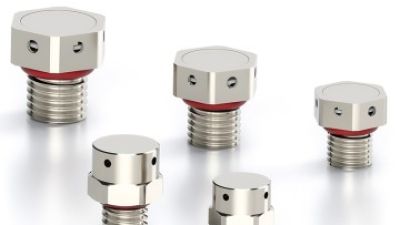
Metal vent plugs provide a practical balance between enclosure protection and pressure equalization in electrical cabinets. With an IP68-rated design, they help limit the entry of dust and moisture while allowing air to circulate, supporting reliable operation in demanding environments. Their metal construction is suited to applications where durability matters, including industrial control cabinets and automotive systems exposed to changing conditions.

UL-certified protection offers added confidence for projects that require components evaluated to recognized safety requirements. Produced by experienced manufacturers in China under strict quality controls, these vent plugs are designed for consistent performance and dependable installation. They can help reduce condensation-related concerns inside sealed enclosures while maintaining a protective barrier against external particles and water. For engineers and equipment manufacturers, a metal vent plug is a compact solution for improving ventilation without compromising the enclosure’s protection.

FAQS

What does IEC 62444 assess for cable glands?

It covers construction, cable anchorage, and resistance to mechanical stress. Ask for test records matching the exact size, material, and cable range. Similar models may perform differently.

Does an IP rating prove overall product quality?

No. It describes specific ingress protection, not general quality. A printed rating alone can create false confidence.

What does IP6X mean?

The first digit 6 means dust-tight under the specified test. The X means no dust rating is stated.

What does IPX7 testing involve?

It involves immersion at one metre for 30 minutes. It does not prove resistance to every outdoor or washdown condition.

Is there one standard immersion depth for IPX8?

No. The required depth and duration depend on the product’s stated conditions. Check the datasheet.

What affects the assembled enclosure’s IP rating?

The gland, cable diameter, seal, locknut, and enclosure must work together. Inspect for damaged threads or flattened seals. Small details matter.

How should I compare metal cable gland materials and threads?

Compare alloy, finish, thread size, and tolerance against the equipment entry. Nickel-plated brass suits many indoor uses; stainless steel may suit harsher or coastal conditions. Confirm the thread system.

What documents should I request from a supplier?

Request a dimensional drawing, material declaration, thread evidence, and relevant test report. Check whether testing covers the complete assembly. Certificates are not always interchangeable; it is easy to overlook that.

Conclusion

This guide explains the differences between M-Type and PG-Type metal cable glands, including their thread standards and typical applications. It outlines how IEC 62444 provides a framework for assessing cable-gland performance and testing, and clarifies IP protection ratings under IEC 60529, with particular attention to IP6X dust protection and IPX8 immersion protection. Readers will also find a practical comparison of ten supplier options, organized around product characteristics rather than brand promotion.

When evaluating a supplier, consider the gland’s material, available thread range, sealing design, and supporting certification data. Choosing the right M-Type/PG-Type Metal Cable Gland also requires matching the cable’s diameter to the gland’s clamping range, confirming that the thread fits the enclosure entry, and selecting an IP rating suited to the installation environment. These checks help ensure a compatible, secure connection and make product comparisons clearer and more consistent.
Liam

Liam

Liam is a dedicated marketing professional at a leading connector manufacturing company that specializes in the production of waterproof brass cable connectors. With a plant area of 2,000 square meters, this high-tech enterprise has evolved since its establishment, focusing on integrating research......
Previous 5 Tips to Find an Eco Friendly Nylon Cable Gland Manufacturer