Inquiry
Form loading...
0%

Picking a nickel-plated brass cable gland supplier isn’t just about comparing prices. The right partner helps protect cable entries in tough environments. You want glands that offer secure strain relief, dependable sealing, and corrosion resistance that stays stable over time. Before you ask for a quotation, get clear technical data. Check things like thread types, clamping ranges, operating temperatures, and ingress protection ratings—honestly, those details really do matter during installation.

Honestly, a supplier you can trust should be upfront about how their Cable Gland Nickel Plated Brass products are made and tested. You'd want to see things like controlled machining, plating thickness that stays consistent, and sealing performance that's actually been verified. And don't be shy—ask for material certificates, inspection records, and a few sample units from the same production line. A professional supplier will talk through compatibility—cable jackets, enclosures, locknuts, washers, all that stuff. They should also get a feel for your project's environment, whether it's machinery, outdoor cabinets, or industrial control panels. Those details really matter.

You know, experience usually brings the small problems to the surface early. So ask your supplier how they deal with things like damaged threads, uneven plating, or replacement requests. No supplier's perfect—that's just reality. And honestly, that's worth talking about openly. A trustworthy company will admit where it falls short and offer practical alternatives. It should also give you responsive engineering support, stable lead times, and quality procedures you can trace. Don't just trust slick brochures. Test samples under realistic assembly conditions. Once you've tightened things up, check the thread engagement and give the seal a good look.

Supplier credibility? A lot of it comes down to communication—and whether they're consistent about it. Before you commit to a bigger order, double-check the packaging, labeling, docs, and after-sales support. The best nickel-plated brass cable gland supplier isn't just technically savvy; they also back it up with reliable service. That combination helps you cut down installation risks, steer clear of hidden costs, and choose a gland that keeps performing—not just the first time you inspect it.
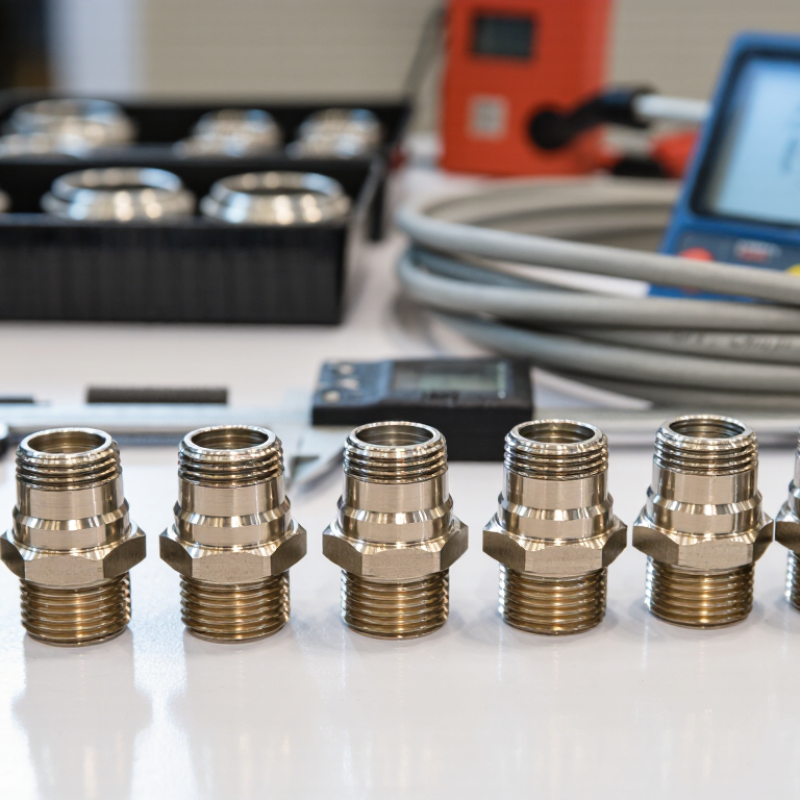
How to Choose a Nickel Plated Brass Cable Gland Supplier?

What Is a Nickel Plated Brass Cable Gland?

How to Choose a Nickel Plated Brass Cable Gland Supplier?

What Is a Nickel Plated Brass Cable Gland?

A nickel plated brass cable gland is a mechanical fitting for entering cables into enclosures. It secures the cable and helps seal the entry point. Its brass body provides strength, while the nickel coating improves surface protection and appearance. Internal seals usually grip the outer cable jacket. A locknut fixes the gland to the enclosure wall.

In practical panel inspections, small details often matter. The cable diameter must match the gland’s clamping range. The thread must also match the enclosure opening. An incorrect fit can reduce sealing performance, even when the gland looks well made. Check the stated IP rating, temperature range, material composition, and thread standard. These values should come from clear technical documents, not sales language. A shiny surface alone proves little. I have seen attractive fittings fail because their seals were poorly matched.

Tips: Ask the supplier for samples, dimensional drawings, test evidence, and batch traceability. Confirm whether the gland suits indoor, outdoor, vibrating, or corrosive environments. Review the sealing insert before placing a large order. It should compress evenly around the cable. Supplier responsiveness is useful, but technical accuracy matters more. A low price may hide inconsistent machining or weak quality control. Also, installation instructions should explain tightening requirements without guesswork. Small uncertainty remains possible, especially when cable jackets vary between manufacturers.

Which Technical Standards Should a Supplier Meet?

A reliable nickel plated brass cable gland supplier should demonstrate compliance with IEC 62444, the international standard for cable glands. Ask for test records covering mechanical strength, sealing performance, cable retention, and temperature resistance. The gland should also carry a verified IP rating under IEC 60529. IP66 is common, while IP68 requires defined immersion conditions. “IP68” alone is incomplete.

Check the installation details. The supplier should state cable diameter ranges, thread tolerances, torque values, plating thickness, and brass composition. For industrial enclosures, request evidence from an ISO/IEC 17025-accredited laboratory. UL 514B may matter in North American projects, while EN 62444 supports many European specifications. Hazardous-area applications need additional assessment under IEC 60079 series requirements. Do not accept a general brochure as technical proof.

Quality management also deserves attention. The ISO Survey 2023 recorded more than 1.26 million valid ISO 9001 certificates worldwide, showing how widely quality systems are used. Yet certification does not guarantee every batch is perfect. Ask for material certificates, lot traceability, salt-spray results, and sample-based dimensional inspection. Nickel plating can look bright while hiding weak adhesion. I have seen this become a field problem. A supplier should explain failed-test handling, not only display certificates. Temperature cycling and repeated cable movement are easy to overlook. A small gap matters.

How to Choose a Nickel-Plated Brass Cable Gland Supplier?

Which technical standards should a supplier meet?

The chart shows the water-ingress protection levels defined by IEC 60529. A qualified supplier should provide verifiable test reports for the declared IP rating and demonstrate that the cable gland design and installation method comply with the applicable requirements of IEC 62444.

IEC 62444: Cable glands for electrical installations.
IEC 60529: IP degrees of protection provided by enclosures.
ISO 965-1: Metric screw thread dimensions and tolerances.
RoHS 2011/65/EU: Restriction of hazardous substances in electrical and electronic equipment.

How to Evaluate Materials and Manufacturing Quality

How to Choose a Nickel Plated Brass Cable Gland Supplier?

Material and manufacturing quality should guide your supplier decision. Nickel plated brass offers strength, corrosion resistance, and stable electrical performance. However, surface appearance alone proves very little. A bright finish can hide weak plating or inconsistent machining.

Ask for the brass grade, plating thickness, and thread tolerance records. Reliable suppliers should provide inspection reports for each production batch. Check whether threads fit smoothly without wobbling or excessive force. Examine the sealing ring for even edges, flexible material, and clean molding. For a 3 1 2 Npt Ip66 Nickel Plated Brass Cable Gland , confirm the NPT thread size and sealing design carefully. IP66 performance depends on the complete assembly, not the gland body alone. Request test conditions, sample results, and photographs showing test equipment when possible.

Tips: Cut one sample open. Inspect the plating beneath the surface. Compare several pieces from the same shipment. Small differences may reveal unstable production control. Also ask how rejected parts are identified and handled. A supplier that discusses defects honestly may be more dependable than one promising perfect output. I have found that packaging matters too. Scratched threads or loose components can damage quality before installation. Do not rely only on a catalog image. Test samples under your actual cable diameter, panel thickness, and working environment. Some evaluation methods may need refinement after field feedback. That is normal, and worth recording.

How to Compare Cable Gland Types, Sizes, and Specifications

Choosing a nickel plated brass cable gland supplier requires more than comparing unit prices. Compare the gland type with the cable’s construction and installation environment. Standard glands suit unarmored cables. Armored versions need clamping for armor layers. EMC glands add a bonding path for screened cables. That detail matters.

Measure the cable’s actual outer diameter, not its catalog label. A 12 mm cable may vary after insulation changes or bending. Match the gland range closely; excessive clearance can weaken sealing. Check thread type, thread length, and panel thickness together. Metric and other thread systems are not interchangeable. Ask for dimensional drawings and sample fit tests. I once accepted a broad size range to simplify purchasing. The installation looked faster, but the seal was inconsistent.

Review IP rating evidence, temperature range, material thickness, plating quality, and strain relief performance. Request torque guidance, inspection records, and batch traceability. These documents show whether the supplier controls production, rather than only reselling parts. A Global Leading Nickel Brass Cable Gland Supplier should explain test methods in plain language. It should also disclose limitations. For outdoor cabinets, inspect the gasket after tightening for twisting or gaps. Small flaws become expensive. Price still matters, but repeatability matters more. Supplier response time, replacement handling, and technical support deserve comparison beside the specification.

How to Assess Supplier Certifications and Quality Control

How to Choose a Nickel Plated Brass Cable Gland Supplier?

A supplier’s certificate should be checked, not simply admired. The ISO Survey 2022 recorded 1,265,216 ISO 9001 certificates across 189 economies. That scale shows certification is common, but it does not guarantee consistent Nickel Brass Cable Gland production. Ask whether the certificate covers the actual manufacturing site, plating process, and cable gland scope. Verify the certificate number, expiry date, certification body, and audit status through an independent registry.

Look for evidence under IEC 62444 and relevant IP testing requirements in IEC 60529. A serious supplier should provide material reports for brass composition, nickel thickness, thread dimensions, and sealing performance. Request recent batch records, not attractive sample photos. Check whether inspection tools are calibrated and traceable. Small details matter.

Ask how the supplier controls incoming brass, plating adhesion, torque, and final visual defects. ISO 2859-1 sampling plans can clarify inspection levels and acceptance limits. A supplier refusing to share these details deserves caution. I would also test samples at operating temperature and with the intended cable diameter. Certificates can age. Processes can drift. That is where my assessment may be imperfect, because a clean audit cannot reveal every future batch problem.

How to Review Pricing, Lead Times, and Order Flexibility

Choosing a Nickel Plated Brass Cable Gland Supplier

Price matters, but the lowest quotation can hide important costs. Compare the full offer, including samples, tooling, packaging, testing, and shipping. Ask for a clear price breakdown. A reliable supplier should explain material grades, plating thickness, thread standards, and included accessories. One quotation looked attractive in my experience, yet missing locknuts raised the final cost by nearly eight percent.

Lead time needs practical checking. Request separate dates for sampling, production, inspection, and dispatch. A supplier promising five days may only mean five days after materials arrive. Ask how they handle busy seasons and sudden material shortages. Good production records are useful evidence. Photos help, but dated inspection reports are stronger.

Order flexibility can protect cash flow. Confirm the minimum order quantity, mixed-size ordering, partial shipments, and change deadlines. Small trial orders reveal more than polished presentations. The Global Leading Nickel Brass Cable Gland Factory should still provide consistent dimensions across small and large batches. That point deserves verification.

Do not rely on promises alone. Check certificates, inspection methods, and communication speed. Ask who approves substitutions if a specified component becomes unavailable. A thoughtful supplier will document the decision before production. My own review process is not perfect; I sometimes focus too much on unit price. A simple comparison sheet reduces that mistake and makes hidden differences easier to see.

How to Choose a Nickel Plated Brass Cable Gland Supplier? - How to Review Pricing, Lead Times, and Order Flexibility

Review Area Practical Benchmark What to Verify Evaluation Guidance
Product Material Nickel-plated brass body with a suitable sealing insert, locknut, and washer for the intended cable and enclosure. Material declaration, technical datasheet, plating description, and component list. Prefer suppliers that clearly distinguish body material, plating, sealing material, and accessory material.
Cable Diameter Compatibility The gland’s clamping range should cover the actual outer diameter of the cable, with allowance for manufacturing tolerance. Cable outer diameter, gland clamping range, thread size, and installation drawing. Do not select by thread size alone; a correct seal depends on the cable diameter range.
Ingress Protection Many industrial cable glands are offered with IP66, IP67, or higher claims when correctly assembled with compatible cable and enclosure. Test report or certificate, test standard, product configuration, and installation conditions. Treat an IP rating as assembly-dependent; verify whether the rating applies to the complete installed system.
Operating Temperature A commonly specified range for general-purpose sealing components is approximately -40°C to +100°C, but the actual range depends on insert material and design. Temperature range for the complete gland, sealing insert, and any accessories. For high-temperature, outdoor, chemical, or low-temperature applications, request application-specific confirmation.
Thread Options Common thread families include metric and PG; thread dimensions and tolerances must match the enclosure or mounting plate. Thread standard, nominal size, pitch or thread designation, tolerance, and available locknuts. Avoid mixing thread systems. Ask for a dimensional drawing before placing a production order.
Indicative Unit Pricing For standard nickel-plated brass glands, unit pricing commonly decreases with size standardization, order volume, packaging quantity, and accessory requirements. Request tiered prices for sample, 100-piece, 500-piece, and 1,000-piece quantities, including accessories and packaging. Compare the total delivered cost rather than the unit price alone. Confirm currency, validity period, taxes, freight, and tooling charges.
Quotation Transparency A complete quotation should identify product code, size, thread, clamping range, material, finish, accessories, quantity, and delivery terms. Written quotation, validity period, payment terms, Incoterm, packing method, and freight assumptions. Give higher scores to quotations that minimize hidden cost and specification ambiguity.
Sample Lead Time Standard samples are often available faster than customized or special-size products; the supplier should state whether samples are taken from regular stock. Sample dispatch date, sample charge, freight responsibility, and available stock quantity. A clear dispatch commitment is more useful than an undefined promise such as “fast delivery.”
Production Lead Time For standard items, request a confirmed production window after drawing approval and payment. Customized parts generally require additional approval and manufacturing time. Lead time basis, order confirmation date, production capacity, holiday schedule, and shipment readiness definition. Separate production time from transit time and customs clearance when comparing offers.
Minimum Order Quantity Standard catalog items may support lower trial quantities, while custom finishes, packaging, or tooling can create a higher minimum order requirement. MOQ by size and configuration, mixed-size ordering policy, and sample-to-production transition rules. Choose a supplier that matches the MOQ to your forecast instead of forcing excess inventory.
Small-Batch and Mixed-Size Orders Useful flexibility includes mixed sizes in one shipment, low-volume replenishment, and the ability to combine standard configurations. Mixed-order surcharge, carton quantity, stock availability, and split-shipment policy. This factor is especially important when demand is uncertain or several cable diameters are used.
Customization Capability Possible options may include thread changes, sealing insert changes, extended body dimensions, special markings, and packaging adjustments. Engineering drawing process, tooling ownership, development charge, approval sample, and change-control procedure. Confirm that customization does not invalidate the stated ingress protection or temperature performance.
Quality Control Relevant checks include dimensions, thread fit, plating appearance, sealing performance, assembly completeness, and packaging condition. Inspection plan, sampling method, batch traceability, nonconformance process, and inspection records. Give preference to suppliers that can provide batch-level records and corrective-action responses.
Compliance Documentation Documentation may include material declarations, test reports, safety data where relevant, and restricted-substance statements requested for the destination market. Document scope, issue date, tested configuration, laboratory details, and whether documents apply to the quoted product. Do not accept a certificate that covers a different size, material, or product construction without written clarification.
Packaging and Labeling Packaging should prevent thread damage, surface scratching, contamination, and mixing of different sizes. Inner and outer carton quantities, labels, batch information, barcode option, and export packaging. Clear labeling reduces receiving errors and supports later traceability.
Payment and Commercial Terms Terms vary by order size, relationship, destination, and risk assessment. Any deposit, balance, inspection, and release conditions should be written clearly. Payment schedule, bank charges, ownership transfer, inspection rights, cancellation terms, and refund conditions. Use the same commercial assumptions for every quotation to make comparisons meaningful.
Order Change and Cancellation Policy A flexible supplier should define when quantity, size, packaging, or delivery changes can be accepted without extra cost. Cut-off point for changes, material commitment, tooling status, restocking charge, and revised lead time. Written rules reduce disputes when forecasts change after order placement.
After-Sales Support Support should cover installation questions, quality complaints, replacement handling, and technical clarification. Response-time commitment, complaint procedure, replacement policy, and technical contact. Assess responsiveness during the quotation stage; it often indicates future communication quality.
Recommended Supplier Score Use a 100-point score: technical fit 30, total cost 20, lead time 15, quality control 15, order flexibility 10, documentation 5, and communication 5. Record evidence for every score and mark unsupported claims as “未验证” or “Not verified.” Select the highest qualified score, not automatically the lowest quoted price.
Comparison Note: Pricing and lead-time figures should be requested under identical specifications, quantities, delivery terms, packaging requirements, and inspection conditions. Final performance depends on the complete cable-gland assembly and correct installation.

FAQS

What is a nickel plated brass cable gland?

It is a mechanical fitting for entering cables into enclosures. The brass body provides strength. The nickel coating improves surface protection and appearance. Internal seals grip the cable jacket. A locknut fixes the gland to the enclosure wall.

How does a cable gland protect an enclosure entry?

The gland clamps the cable and seals the opening. Its sealing insert compresses around the cable jacket. This helps limit dust and water entry. The seal must compress evenly. A poor fit can weaken protection.

How should I choose the correct gland size?

Match the gland’s clamping range with the cable diameter. Check the cable jacket carefully. Different manufacturers may produce slightly different outer diameters. The enclosure thread must also match. A shiny gland proves very little.

Which technical information should a supplier provide?

Request dimensional drawings, cable ranges, thread details, and tightening values. Ask for material composition and plating thickness. The supplier should state temperature limits clearly. Installation instructions should avoid guesswork. Missing data is a warning sign.

Which standards are relevant to cable glands?

IEC 62444 covers important cable gland requirements. IEC 60529 supports verification of ingress protection ratings. Ask for evidence covering strength, sealing, retention, and temperature resistance. An IP66 rating is common. IP68 needs defined immersion conditions.

Does an ISO 9001 certificate guarantee consistent quality?

No certificate guarantees every batch is perfect. Request lot traceability and material certificates. Sample-based dimensional checks can reveal machining variation. Salt-spray results may show plating performance. Certification helps, but inspection still matters.

What should I inspect before placing a large order?

Request samples and review the sealing insert first. Measure the gland and test the cable fit. Check whether compression remains even around the jacket. Ask about batch records and failed-test handling. A low price may hide weak quality control.

Can one cable gland suit every environment?

No. Select the gland for indoor, outdoor, vibrating, or corrosive conditions. Review its temperature range and sealing materials. Repeated cable movement can expose small weaknesses. I would test unusual conditions before ordering heavily. Small gaps matter.

Conclusion

Choosing the right Nickel-Plated Brass Cable Gland Supplier is essential for achieving reliable cable protection, secure installation, and long-term performance. A nickel-plated brass cable gland typically provides strong mechanical protection, corrosion resistance, and effective sealing in demanding industrial environments. When evaluating a supplier, confirm that its products meet relevant technical standards and are manufactured with high-quality brass, consistent nickel plating, accurate threading, and durable sealing components. Attention should also be given to manufacturing processes, dimensional accuracy, and resistance to vibration, moisture, temperature changes, and mechanical stress.

A dependable supplier should offer a suitable range of cable gland types, thread systems, sizes, IP ratings, and application specifications. Certifications, inspection procedures, traceability, and quality-control systems can help verify product consistency. In addition to technical performance, compare pricing transparently, minimum order quantities, production and delivery times, sample availability, and the supplier’s ability to support customized or flexible orders. A balanced assessment of quality, compliance, service, and commercial terms will help ensure a practical and reliable purchasing decision.

Liam

Liam

Liam is a dedicated marketing professional at a leading connector manufacturing company that specializes in the production of waterproof brass cable connectors. With a plant area of 2,000 square meters, this high-tech enterprise has evolved since its establishment, focusing on integrating research......
Previous What Are the 7 Best Cable Gland Accessories?