Inquiry
Form loading...
0%

Choosing the right Cable Gland Accessories can determine whether an installation remains secure, sealed, and serviceable over time. In industrial panels, outdoor enclosures, and control cabinets, small components often carry significant responsibility. A locknut must hold firmly. A sealing washer must resist moisture. An earth tag must maintain electrical continuity. These details are easy to overlook.

This guide examines seven widely used accessories and explains where each one performs best. The selection considers material quality, ingress protection, thread compatibility, mechanical strength, and installation conditions. Practical experience shows that a durable gland alone cannot solve every cable entry problem. Accessories must match the cable diameter, enclosure material, environmental exposure, and maintenance requirements. That sounds obvious, but mistakes still happen.

There is no universal “best” accessory. A nylon washer may suit a clean indoor cabinet, while a corrosion-resistant earth tag may be essential near saltwater. A reducer can solve a thread mismatch, yet it may create another inspection point. We will look closely at these trade-offs, including installation habits that seem acceptable but deserve reconsideration. Product standards and manufacturer instructions should always guide final selection. Reliable results come from checking dimensions, tightening correctly, and inspecting the finished entry. Small checks matter. This overview aims to support informed decisions, not replace engineering judgment or site-specific verification.
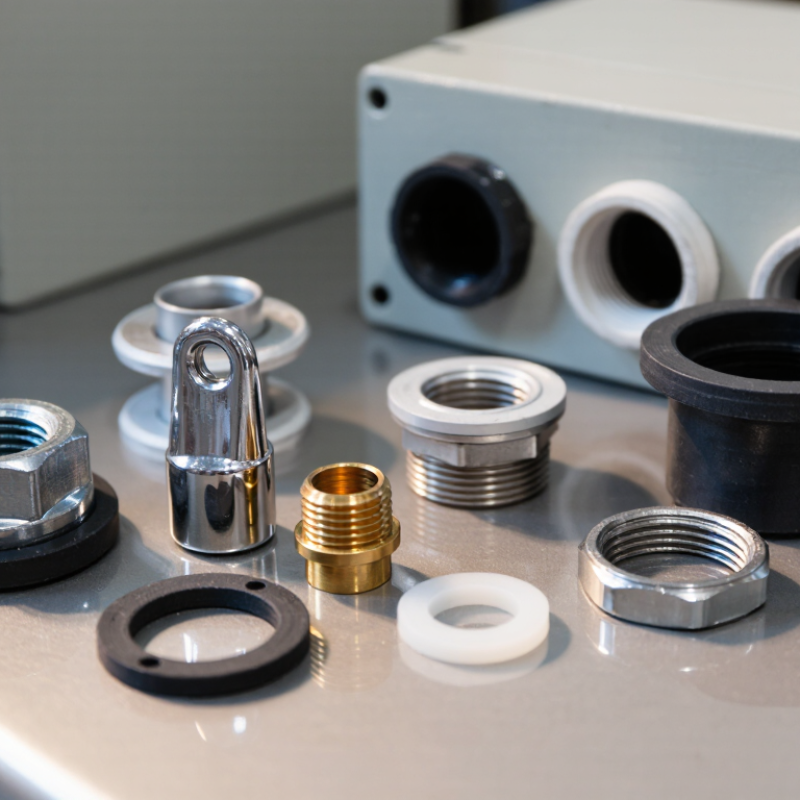
What Are the 7 Best Cable Gland Accessories?

Cable Gland Locknuts for Secure Panel Mounting

cable gland Locknuts for Secure Panel Mounting

cable gland locknuts are small parts with a serious job. They hold a cable gland firmly against a panel wall. In control cabinets, this connection may face vibration, heat, moisture, and repeated cable movement. A suitable locknut helps maintain alignment and supports the enclosure’s sealing system.

Choose a locknut that matches the gland thread exactly. Check the thread type, panel thickness, and available clearance before installation. Metal locknuts suit demanding industrial environments, while non-metallic options can reduce corrosion concerns. A clean panel hole matters too. Burrs and paint buildup can prevent full contact. Tighten the locknut evenly, using the recommended torque when available. More force is not always better.

Tips: Inspect both thread surfaces before fitting. Keep the locknut square to the panel. Recheck it after initial equipment testing.

One common mistake is treating every locknut as interchangeable. They are not. Different thread standards may appear similar but fail to engage correctly. I have seen loose fittings caused by rushed hand assembly and poor access behind the panel. That detail is easy to miss. A final visual check should confirm full thread engagement, firm seating, and no damage to nearby seals. Installation records also improve reliability, although teams sometimes skip them under time pressure. That habit deserves reconsideration.

Cable Gland Sealing Washers for Weatherproof Joints

What Are the 7 Best Cable Gland Accessories?

Cable Gland Sealing washers help create weatherproof joints around cables entering enclosures. They sit between the gland and the enclosure wall, closing small gaps that invite rain, dust, and condensation. A correct washer should match the gland thread, enclosure opening, and working environment.

For outdoor installations, choose washers made from materials that resist water, ultraviolet exposure, temperature changes, and mild chemicals. Rubber or elastomer washers often provide useful flexibility, while rigid sealing rings can support firm compression. Check the washer’s inner diameter carefully. A loose fit may leave a visible moisture path. An overly tight fit can distort during installation.

Small details matter.

During inspections, I look for even compression around the entire gland base. The washer should lie flat, without folds, cuts, or trapped debris. Tighten the gland according to its technical instructions, rather than relying on force. Excessive torque may damage the washer or enclosure surface. Insufficient torque can weaken the seal when cables move.

Cable Gland And Accessories should be selected as a complete sealing system, not as unrelated parts. Washers, locknuts, shrouds, and strain relief components must work together. I have seen otherwise careful installations fail because one inexpensive washer was reused. That shortcut seemed harmless, but the compressed material had already lost its shape. Weatherproofing deserves a final visual check after installation and again after severe weather.

Earth Tags for Reliable Cable Gland Bonding

What Are the 7 Best Cable Gland Accessories?

Earth Tags for Reliable cable gland Bonding

Earth tags deserve serious attention because they create a dependable bonding path around a cable gland. They are simple metal components, yet small installation errors can weaken protection. During cable-entry inspections, I look for clean contact, correct size, and firm tightening. A loose tag can sit unnoticed behind a locknut. Not a minor detail.

An earth tag should match the gland thread and enclosure material. Its contact faces must bite through paint, plating, or surface oxidation. Remove only the coating needed for a sound connection. Keep the exposed area controlled. Excessive bare metal may invite corrosion in humid coastal environments. Use a suitable washer and tighten the locknut evenly. Do not crush the tag. Measure bonding continuity with an appropriate tester after installation. A visual check alone cannot prove a low-resistance path.

For projects sourcing Cable Gland And Accessories Malaysia , inspect earth tags alongside locknuts, shrouds, sealing washers, and reducers. Material choice matters. Stainless steel may suit corrosive locations, while other applications need compatible plated metals. Mixing dissimilar metals can create trouble over time. I have seen tidy cable entries fail because bonding was treated as an afterthought. That mistake is easy to repeat. Record the tag size, enclosure contact, tightening method, and test result. Recheck after maintenance or cable movement. The practical question is not whether an earth tag is present. It is whether the connection remains reliable under real operating conditions.

Cable Gland Shrouds for Added Environmental Protection

What Are the 7 Best Cable Gland Accessories?

Cable Gland Shrouds for Added Environmental Protection

cable gland shrouds are practical accessories for exposed installations. They cover the gland body, reducing direct contact with rain, dust, oil, and ultraviolet light. This matters near outdoor control panels, rooftop equipment, and processing machinery. A shroud can also hide sharp edges and reduce accidental impact damage.

Grand View Research estimated the global cable glands market at more than USD 2 billion in 2023. Its report also indicates continued growth through 2030, driven by industrial infrastructure and power projects. More installations mean more attention to small sealing details. However, a shroud does not automatically increase an assembly’s IP rating. IEC 60529 evaluates the complete enclosure system, including the gland, cable diameter, locknut, seal, and installation method.

Choose a shroud made from material suited to the site. Flexible elastomers can handle movement, while tougher compounds may resist oils and abrasion better. Check the gland’s thread size and sealing range carefully. A loose shroud can collect water underneath. A tight one can distort the seal. Small mistake.

During inspections, technicians should look for cracking, discoloration, trapped moisture, and poor cable alignment. Shrouds often receive less attention than glands themselves. That is a weakness in many maintenance routines. They should not replace correct drainage, earthing, or enclosure selection.

A reflective question remains useful: is the shroud protecting the gland, or only hiding an installation problem?

Adaptors and Reducers for Matching Gland and Entry Sizes

Adaptors and reducersare essential when a Cable Gland Thread does not match the enclosure entry. A reducer steps down a larger entry, while an adaptor increases compatibility between different thread systems. The fit must remain mechanical, sealed, and serviceable. Small gaps invite moisture, dust, and cable movement.

The IEC 62444 standard defines cable-gland performance requirements, including strain relief and protection against external influences. Its principles make sizing more than a visual check. Measure the cable outer diameter, entry thread, and available thread engagement. Then compare the gland’s sealing range with the actual cable jacket.

Cable Gland And Cable Size should be recorded on installation documents, not guessed at the workbench.

Market data also supports careful selection. Grand View Research reported that the global cable glands market was valued at approximately USD 2.3 billion in 2023, with continued growth expected through 2030. More installations mean more mismatched entries in the field.

In practice, a reducer with insufficient thread engagement can loosen under vibration. An adaptor may solve the thread problem but still fail to seal the cable correctly. Check both interfaces.

Use compatible sealing washers where the enclosure design requires them. Inspect for crushed seals, exposed threads, and sharp entry edges. I have seen installers focus on thread size and overlook cable diameter. That mistake is easy to repeat. Datasheets help, but site conditions can disagree. Temperature, movement, and enclosure material deserve a second look.

Stopping Plugs for Sealing Unused Cable Entries

Stopping plugs are among the most useful cable gland accessories for unused cable entries. They prevent dust, moisture, and insects from entering an enclosure through an open port. In field maintenance, I have seen one missing plug create condensation around otherwise protected terminals.

Choose a plug that matches the entry thread, material, and enclosure requirements. Nylon suits many indoor installations, while metal versions can provide greater mechanical strength. Check the thread size carefully. A plug that feels close may still loosen under vibration. The sealing washer also needs a clean, flat surface. Small details matter.

Installation should follow the manufacturer’s stated tightening guidance, not guesswork. Over-tightening can damage threads or distort the seal. Under-tightening may leave a visible gap. I once found a plug installed without its gasket; the enclosure looked complete, but the seal was unreliable. That mistake was easy to miss during a quick inspection.

Before closing the enclosure, inspect the plug for cracks, cross-threading, and uneven compression. Test the unused entry after installation when the application demands verified ingress protection. Keep spare plugs in a labeled container, because emergency substitutions often cause poor fits. Stopping plugs are simple components. Their performance depends on correct selection and careful installation.

What Are the 7 Best Cable Gland Accessories? – Stopping Plugs for Sealing Unused Cable Entries

The most suitable stopping plug depends on thread standard, enclosure material, environmental exposure, grounding requirements, and certification needs. The specifications below represent commonly available industrial configurations; always verify the exact product datasheet before installation.

No. Stopping Plug Type Typical Material Common Thread Sizes Typical Protection Typical Temperature Range Best Application Selection Notes
1 Nylon Metric Stopping Plug Polyamide 6 or polyamide 6.6 M16, M20, M25, M32, M40, M50, M63 Commonly IP54 to IP68, depending on seal design Approximately -30°C to +100°C Indoor control panels, machinery, and lightweight enclosures Lightweight, corrosion-resistant, and economical. Match the metric thread pitch and sealing washer.
2 Nylon NPT Stopping Plug Polyamide 6 or polyamide 6.6 1/2, 3/4, 1, 1-1/4, 1-1/2, 2 in NPT Commonly IP54 to IP68, depending on construction Approximately -30°C to +100°C North American electrical boxes and industrial control cabinets Use only with a correctly tapped NPT entry. NPT and metric threads are not interchangeable.
3 Nickel-Plated Brass Metric Plug Nickel-plated brass with elastomer sealing ring M16, M20, M25, M32, M40, M50, M63 Commonly IP66 to IP68 with an appropriate O-ring Approximately -40°C to +100°C Outdoor equipment, automation cabinets, and high-vibration installations Offers greater mechanical strength than nylon. Check plating compatibility in corrosive environments.
4 Nickel-Plated Brass NPT Plug Nickel-plated brass with sealing washer or O-ring 1/2, 3/4, 1, 1-1/4, 1-1/2, 2 in NPT Commonly IP66 to IP68 when correctly installed Approximately -40°C to +100°C Industrial junction boxes, motors, and exposed electrical equipment Suitable for robust applications. Apply thread sealing only when permitted by the enclosure and installation standard.
5 Stainless Steel Stopping Plug Stainless steel, commonly grade 316 or 316L M16 to M63; 1/2 to 2 in NPT Commonly IP66 to IP68, subject to the sealing system Approximately -60°C to +150°C, depending on the seal Marine, food-processing, chemical, and highly corrosive environments Provides strong corrosion resistance. Confirm whether the O-ring material is compatible with cleaning chemicals.
6 EMC Conductive Stopping Plug Nickel-plated brass or conductive metal with contact element M16, M20, M25, M32; 1/2 to 1-1/4 in NPT Commonly IP66 to IP68 when properly fitted Approximately -40°C to +100°C Variable-frequency drives, instrumentation, data systems, and EMC-sensitive panels Use when the unused entry must maintain electrical continuity or shielding performance. Verify the enclosure bonding method.
7 Certified Hazardous-Area Stopping Plug Nickel-plated brass, stainless steel, or approved engineered polymer Commonly M16 to M63; 1/2 to 2 in NPT Certification-dependent; often specified for IP66 or IP68 installations Certification- and seal-dependent; commonly about -60°C to +100°C Electrical equipment installed in classified gas, vapor, or dust areas The plug must carry the required protection method and certification for the exact hazardous-area zone, gas or dust group, and temperature class.
Key selection checks: Confirm the thread type and size, enclosure wall thickness, required IP rating, sealing material, operating temperature, corrosion exposure, grounding or EMC requirements, and any applicable hazardous-area certification. Install the stopping plug according to the manufacturer’s torque and sealing instructions.

EMC Kits for Shielded Cable Grounding and Interference Control

What Are the 7 Best Cable Gland Accessories?

For shielded cables, EMC accessories deserve more attention than decorative fittings. The seven practical choices are EMC earth tags, bonding rings, grounding springs, braided bonding straps, conductive locknuts, sealing inserts, and protective caps. Together, they create a low-impedance path from the cable screen to the enclosure. A Metal Cable Gland can support this connection when its contact surface remains clean and firmly compressed.

IEC 61000-5-2 stresses controlled bonding and grounding for electromagnetic compatibility installations. CISPR 32 also limits unwanted emissions from electronic equipment. These requirements explain why a small grounding gap can cause large problems. Grand View Research estimated the global electromagnetic shielding market at over USD 7 billion in 2023, with continued growth expected through 2030. That investment reflects a practical concern: interference can disrupt sensors, communication links, and industrial controls. In field inspections, loose locknuts and painted contact areas appear repeatedly. The kit was correct. The installation was not.

Tips: Remove paint beneath bonding points. Keep the braid short and wide. Check screen continuity with a low-resistance meter. Match the gland, insert, and cable diameter carefully. A spring contact may look secure but lose pressure after repeated vibration. I have also seen technicians trust visual inspection too much. That habit needs reconsideration. Temperature cycling, moisture, and cable movement can slowly weaken EMC performance. Use documented torque values, inspect the contact zone, and record test results during commissioning.

What Are the 7 Best Cable Gland Accessories?

EMC kits for shielded cable grounding and interference control

The chart compares seven commonly used cable gland accessories by their typical contribution to shield bonding and installation versatility. Scores use a practical 1–10 engineering scale: higher values indicate stronger EMC usefulness or broader application coverage. Actual performance depends on cable construction, gland material, enclosure design, and correct installation.

FAQS

What is a stopping plug used for?

It seals an unused cable entry. It helps block dust, moisture, and insects. Small gaps matter.

How should I choose the correct stopping plug?

Match the entry thread, material, and enclosure requirements. Check the thread size carefully. A nearly matching plug may loosen under vibration.

Which stopping plug material should I use?

Nylon often suits indoor installations. Metal versions may offer greater mechanical strength. Consider impact, temperature, and installation conditions.

Why is the sealing washer important?

The washer supports a reliable seal against the enclosure surface. Keep the surface clean and flat. A missing gasket can remain unnoticed during a quick inspection.

How tightly should I install a stopping plug?

Follow the stated tightening guidance. Do not guess. Over-tightening can damage threads or distort the seal. Under-tightening may leave a visible gap.

What should I inspect after installing the plug?

Check for cracks, cross-threading, and uneven compression. Inspect the seal around the entire entry. A complete-looking enclosure may still leak.

Which accessories help shielded cables reduce interference?

Useful options include earth tags, bonding rings, grounding springs, bonding straps, conductive locknuts, sealing inserts, and protective caps. They help connect the cable screen to the enclosure with low resistance.

How can I improve EMC grounding during installation?

Remove paint from bonding points. Keep the bonding braid short and wide. Match the gland, insert, and cable diameter. Check screen continuity with a low-resistance meter.

Why can an EMC connection weaken over time?

Vibration, moisture, temperature changes, and cable movement can reduce contact pressure. Visual inspection alone is not enough. I used to trust it too much.

How should maintenance teams verify these connections?

Use documented torque values and inspect the contact zone. Test unused entries when verified sealing is required. Record continuity and inspection results during commissioning.

Conclusion

Cable Gland Accessories play an important role in creating safe, durable, and properly sealed cable installations. Locknuts secure glands firmly to panels, while sealing washers help prevent water, dust, and other contaminants from entering through joints. Earth tags support reliable bonding and grounding, and shrouds provide an additional layer of protection against moisture, dirt, and mechanical exposure in demanding environments.

Adaptors and reducers make it easier to match different gland and entry sizes, ensuring a practical and well-fitted installation. Stopping plugs seal unused cable entries, helping maintain enclosure protection and preventing unwanted debris from entering. For shielded cables, EMC kits support effective grounding and help control electromagnetic interference. Together, these accessories improve installation quality, environmental resistance, electrical safety, and long-term system reliability.

Ethan

Ethan

Ethan is a dedicated marketing professional at Zhejiang Hongxiang Connector Co., Ltd., a high-tech enterprise specializing in the production of waterproof brass cable connectors. With a keen understanding of the industry and extensive knowledge of the company’s products, Ethan plays a crucial role......
Previous 7 Best Nylon Cable Glands for Cabinet Customization